
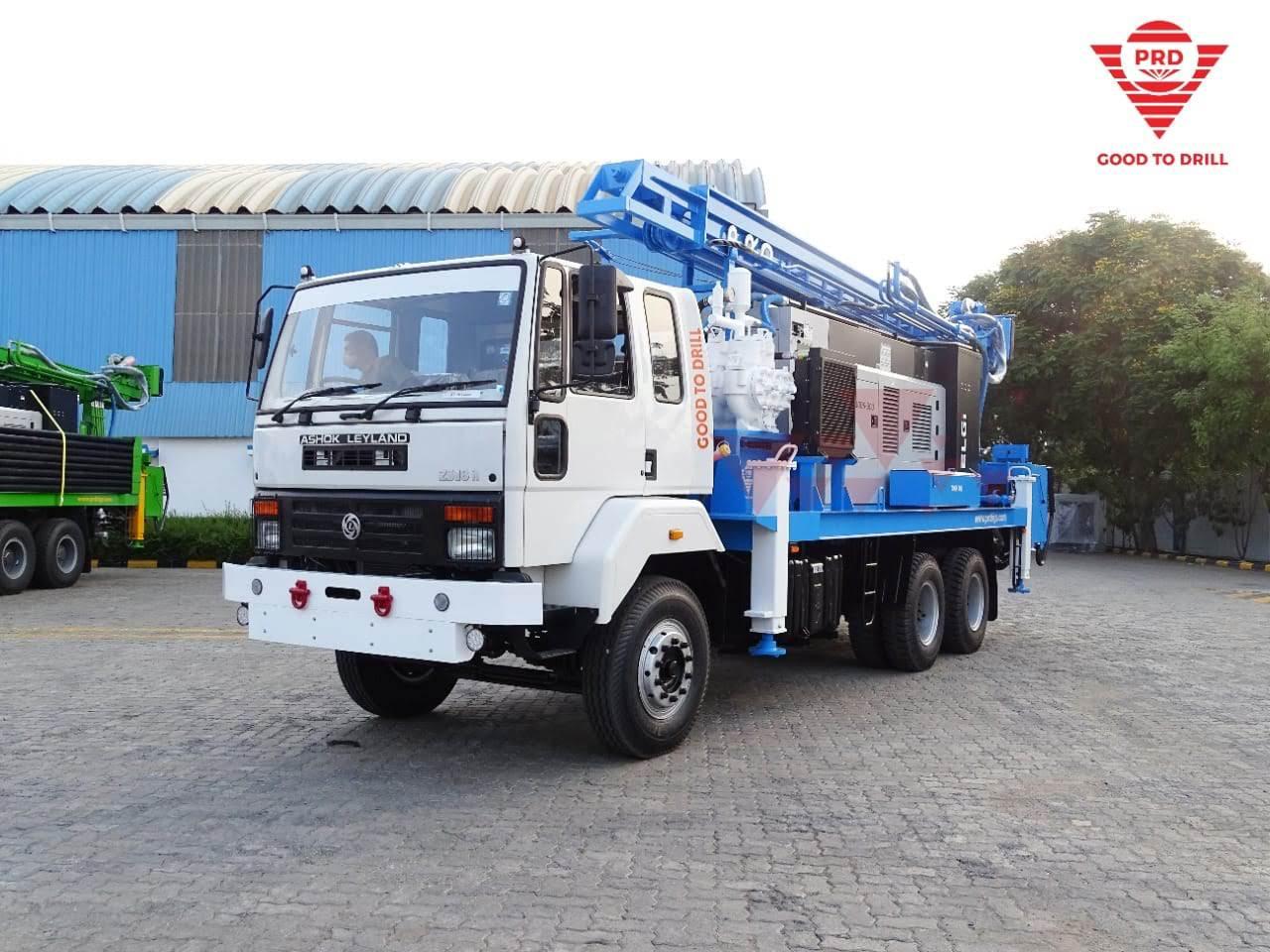
Buying a truck in Kenya is a major business decision. For many businesses, the truck is not simply a vehicle — it is one of the main tools used to generate income.
A truck may be used to deliver goods, transport construction materials, carry agricultural produce, move cargo between towns, supply businesses or operate on long-distance haulage routes. Choosing the wrong truck can therefore affect your fuel costs, carrying capacity, maintenance expenses and the number of trips you need to make.
If you are planning to buy a truck in Kenya in 2026, this guide takes you through the process step by step. We will cover how to choose the right truck, what specifications to check, how much you may need to budget, cash purchases, bank financing, documents, vehicle quotations and what to check before completing your purchase.
How to Buy a Truck in Kenya: The 7 Steps
The truck-buying process can be broken down into seven important steps:
- Define what you need the truck to do
- Set your truck budget
- Choose the right truck size and specification
- Compare truck prices and running costs
- Decide between cash and bank financing
- Get a quotation and complete the required paperwork
- Confirm the truck and complete the purchase
Let’s look at each step in detail.
Step 1: Define What You Need the Truck to Do
Before looking at truck prices, start with your business.
Ask yourself a simple question:
What will the truck be carrying and where will it be operating?
A truck transporting bread around Nairobi does not have the same requirements as a truck carrying ballast from a quarry. A distribution business may need a 4×2 truck, while a heavy-duty construction operation may need a 6×4 tipper.
Think about:
- The type of cargo
- Average cargo weight
- Distance travelled per day
- Distance travelled per month
- Road conditions
- Number of trips per day
- Loading and unloading points
- Expected revenue per trip
- Body type required
- Number of drivers
- Future growth of the business
Examples of Truck Applications in Kenya
| Business | Possible Truck Type |
|---|---|
| Grocery distribution | Light/medium-duty truck |
| Bakery deliveries | Light commercial truck |
| Hardware distribution | Medium-duty truck |
| Beverage distribution | Medium-duty truck |
| General logistics | Medium/heavy-duty truck |
| Construction materials | Haulage truck or tipper |
| Quarry operations | Heavy-duty tipper |
| Long-distance haulage | Heavy-duty haulage truck |
| Water transportation | Truck with water bowser body |
| Petroleum transportation | Suitable tanker configuration |
| Agricultural produce | Cargo/haulage truck |
The application should come before the truck.
Step 2: Set Your Truck Budget
Once you know what you need the truck to do, determine how much you can realistically spend.
Do not look only at the purchase price.
Your actual truck budget should also consider:
- Deposit, if financing
- Monthly loan repayment
- Insurance
- Fuel
- Driver wages
- Maintenance
- Tyres
- Licensing and statutory costs
- Body-building costs where applicable
- Parking and operating expenses
- Expected downtime
- Working capital
A truck can be affordable to purchase but difficult to operate if the monthly running costs are too high for the business.
How Much Does a Truck Cost in Kenya?
Truck prices vary significantly according to the model, payload, specification and body configuration.
For example, the current published Ashok Leyland Kenya range includes trucks from the Phoenix at Ksh 2,964,444 including VAT to the U-2518/U-2523 Tipper at Ksh 9,277,778 including VAT.
Some published prices include:
| Ashok Leyland Truck | Published Price Including VAT |
|---|---|
| Phoenix | Ksh 2,964,444 |
| Partner | Ksh 3,888,889 |
| Ecomet 1012 | Ksh 4,000,000 |
| Ecomet 1214 | Ksh 4,433,333 |
| BOSS 1218 | Ksh 5,111,111 |
| 1618 Haulage | Ksh 6,431,556 |
| 2518 Haulage | Ksh 7,722,222 |
| 2518 iL Tipper | Ksh 8,833,333 |
| U-2518 / U-2523 Tipper | Ksh 9,277,778 |
These are published vehicle prices and can change. Body specifications, vehicle configuration and commercial terms can also affect the final amount, so request a current quotation before making a purchase.
Step 3: Choose the Right Truck Size and Specification
This is one of the most important parts of learning how to buy a truck in Kenya.
Do not choose a truck simply because it looks powerful.
Choose it according to the load you expect to carry.
What Is GVW?
GVW means Gross Vehicle Weight.
It refers to the maximum permitted total weight of the vehicle, including the vehicle itself and its load.
What Is Payload?
Payload is the amount of cargo the truck is designed to carry.
For example, the Ashok Leyland Phoenix has a GVW of 3,500 kg and a payload of up to 2 tonnes. The Partner moves up to 5 tonnes, while the Ecomet 1012 can carry up to 7 tonnes.
Compare Some Common Truck Sizes
| Model | GVW | Payload | Body |
|---|---|---|---|
| Phoenix | 3,500 kg | Up to 2 t | 9.5 ft |
| Partner | 7,200 kg | Up to 5 t | 14 ft |
| Ecomet 1012 | 10,900 kg | Up to 7 t | 17 ft |
| Ecomet 1214 | 15,500 kg | Up to 10 t | 19 ft |
| BOSS 1218 | 12,000 kg | Up to 10 t | 22 ft |
| 1618 Haulage | 16,200 kg | Up to 12 t | 24 ft |
| 2518 Haulage | 25,000 kg | Up to 18 t | 23 ft |
| 2518 iL Tipper | 25,000 kg | Up to 18 t | 12 m³ |
These figures show why choosing according to the application matters. A business that normally carries two tonnes does not necessarily benefit from buying an 18-tonne truck.
What Truck Specifications Should You Compare?
When comparing trucks, pay attention to more than horsepower.
1. Payload
Check the manufacturer’s stated payload and make sure it suits the loads you intend to carry.
2. Engine Power
Horsepower is important, particularly when carrying heavy loads and operating on demanding routes.
3. Torque
Torque affects how the truck performs when pulling heavy loads, particularly when climbing.
4. Gearbox
Look at the number of gears and gearbox type. Gear ratios can affect how the truck performs on highways, gradients and when fully loaded.
5. Drive Configuration
You will commonly see configurations such as 4×2 and 6×4.
A 4×2 truck can be suitable for many distribution and haulage applications, while a 6×4 configuration can be appropriate for heavier-duty work.
6. Loading Body
The body length and design should match the cargo.
A business carrying long or bulky goods may need more loading length, while a quarry operator may require a tipper body instead of a standard cargo body.
7. Fuel Tank
Fuel tank capacity becomes particularly important for trucks working long-distance routes.
8. Braking System
For heavier commercial vehicles, braking performance is an important consideration.
9. Suspension
Look at the suspension setup and how it matches the roads and loads the truck will encounter.
10. Warranty
Check the manufacturer’s warranty terms before buying.
The current Ashok Leyland Kenya truck range lists a 5-year or 500,000 km warranty for the models covered on its product pages, subject to the applicable terms and conditions.
Step 4: Compare Truck Prices and Running Costs
The cheapest truck is not automatically the best truck for your business.
Instead, compare the cost of putting the truck to work.
For example, consider a business carrying 10 tonnes of cargo.
If you buy a truck that can only carry 5 tonnes, you may need two trips to move the same quantity.
A larger truck with the appropriate payload may therefore make more sense, depending on the route and business economics.
At the same time, buying a truck that is much larger than your normal load can tie up more capital and increase operating expenses.
Calculate Your Expected Truck Revenue
Before buying, estimate:
Revenue per trip × trips per day × working days
Then compare that against:
- Fuel
- Driver wages
- Maintenance
- Insurance
- Financing repayment
- Tyres
- Other operating expenses
This gives you a better picture of the truck’s earning potential.
Step 5: Decide Between Cash and Bank Financing
When you buy a truck in Kenya, you generally have two main ways of paying for it:
Cash Purchase
You pay the purchase price using your available funds.
Bank or Asset Financing
A bank or financing institution provides funding for the vehicle, subject to its assessment and approval.
Both options have advantages.
Buying a Truck With Cash
A cash purchase can make sense if your business has enough available capital and paying for the truck will not leave you short of working capital.
Potential advantages include:
- No loan repayment
- No financing interest over the repayment period
- Full ownership after purchase
- Less exposure to changes in financing costs
However, using all your available capital to buy a truck can leave less money for fuel, salaries, stock and day-to-day business expenses.
Buying a Truck Through Bank Financing
Bank financing can help a business acquire a truck without paying the entire purchase price upfront.
Ashok Leyland Kenya currently lists financing through partner institutions, with financing structures that can go up to 100% of the vehicle price, subject to credit assessment. The published financing information also indicates repayment periods of up to 60 months.
The listed partner institutions include:
- NCBA
- KCB Bank
- Absa Bank Kenya
- Bank of Africa
- Family Bank
- Unaitas SACCO
Financing terms are not guaranteed simply because a vehicle is eligible for financing. The financing institution assesses each application and determines the final approval, rates, fees, deposit and repayment terms.
What Documents May Be Required?
The published Ashok Leyland Kenya financing information lists requirements including:
- Valid Kenyan National ID
- KRA PIN
- Six months of personal or business bank statements
- Business registration for companies or SACCOs
- Deposit where applicable
- Comprehensive insurance for the loan period
The exact requirements can differ according to the financing institution and applicant.
How Much Deposit Do You Need to Buy a Truck?
There is no single deposit amount that applies to every truck buyer.
It depends on the financing structure and the institution approving the facility.
The current Ashok Leyland Kenya financing page shows examples using a 20% deposit and also states that partner financing can go up to 100% of vehicle price, subject to credit assessment.
For this reason, do not assume that every buyer will receive the same financing terms.
The best approach is to:
- Choose your truck.
- Request a quotation.
- Approach the preferred financing institution.
- Submit the required documents.
- Wait for the credit assessment.
- Confirm the approved terms before committing.
Step 6: Get a Truck Quotation and Complete the Paperwork
Once you know the truck you want, request a formal quotation.
Your quotation should clearly show the vehicle and the applicable price.
Check:
- Truck model
- Vehicle specification
- Price
- VAT
- Body configuration
- Additional equipment
- Delivery terms
- Warranty
- Payment terms
- Financing arrangements where applicable
If you are financing the truck, the quotation can also be used as part of the financing application.
Do not rely only on a verbal price.
Get the details in writing.
Step 7: Confirm the Truck and Complete the Purchase
You are now at the final stage.
Before completing the purchase, confirm that the vehicle you are buying matches the specification you agreed on.
Check:
Vehicle Model
Make sure the model and variant are correct.
Engine Specification
Confirm the engine, power and emission specification.
Payload
Make sure the payload matches your business requirements.
Body
Confirm the loading body length or tipper/tanker configuration.
Warranty
Read the applicable warranty terms.
Financing
If financed, confirm the approved amount, deposit, interest rate, repayment period and other applicable charges with the financing institution.
Insurance
Confirm the insurance requirements before taking delivery.
Delivery
Confirm when and where the vehicle will be delivered.
8 Things to Avoid When Buying a Truck in Kenya
Even after following the seven steps above, there are mistakes that can make a truck purchase expensive.
1. Buying Based Only on Price
The cheapest truck may not be the cheapest truck to operate.
2. Buying More Truck Than You Need
An 18-tonne truck is not automatically better for a business carrying two or three tonnes.
3. Ignoring Payload
Always check the actual payload required by your business.
4. Forgetting the Loading Body
The chassis is only part of the equation. The body must match the cargo and application.
5. Ignoring Fuel Costs
Fuel can become one of the largest recurring expenses for a commercial truck.
6. Using All Your Working Capital
If paying cash leaves your business without enough money to operate, reconsider the structure of the purchase.
7. Choosing Financing Without Comparing Terms
Look at the complete cost of financing, not just the monthly repayment.
8. Not Asking About After-Sales Support
A commercial truck earns money when it is working.
Ask about servicing, genuine spare parts, technicians and roadside support before making your decision.
Ashok Leyland’s Kenya after-sales network includes factory-trained technicians, genuine parts and roadside assistance, according to the manufacturer’s current service information.
Which Ashok Leyland Truck Should You Buy?
The answer depends on your business.
For Light Commercial Deliveries
The Ashok Leyland Phoenix offers up to 2 tonnes of payload on a 9.5 ft body and is suited to applications such as groceries, bakeries, supermarkets, pharmaceuticals and light logistics.
For Medium-Duty Distribution
The Ashok Leyland Partner provides up to 5 tonnes of payload with a 14 ft loading body. It can suit hardware, beverages, logistics, fresh produce and other distribution work.
For 7-Tonne Loads
The Ecomet 1012 provides up to 7 tonnes of payload and a 17 ft loading body, making it a practical option for medium-duty haulage and distribution.
For 10-Tonne Loads
The Ecomet 1214 and BOSS 1218 offer up to 10 tonnes of payload, although their configurations differ. The Ecomet 1214 has a 19 ft loading length, while the BOSS 1218 has a 22 ft body.
For Heavy Haulage
The 1618 Haulage offers up to 12 tonnes of payload on a 24 ft body, while the 2518 Haulage moves up to 18 tonnes on a 6×4 configuration.
For Quarry and Construction Work
A heavy-duty tipper such as the 2518 iL Tipper or U-2518/U-2523 Tipper can be considered for applications involving ballast, sand, stones and construction materials. The U-2518/U-2523 is listed with up to 18 tonnes of payload and a 12 m³ bucket.
New or Used Truck: Which Should You Buy?
A new truck is not the only option available to a Kenyan business, but the decision should be based on the numbers.
Buying a New Truck
Advantages can include:
- New vehicle
- Manufacturer warranty
- Known vehicle history
- Latest specification
- Lower risk of unknown previous damage
- Access to structured financing options
Buying a Used Truck
A used truck can have a lower purchase price, but you need to look carefully at its:
- Mileage
- Service history
- Engine condition
- Gearbox
- Chassis
- Suspension
- Brakes
- Tyres
- Accident history
- Previous operating conditions
For a business that depends heavily on the truck for daily income, downtime should be part of the calculation.
Why the Right Truck Matters More Than the Biggest Truck
It is easy to assume that a bigger truck will always make more money.
That is not necessarily the case.
If your business normally carries 4 tonnes, buying an 18-tonne truck may leave you paying for capacity that you do not use.
On the other hand, if your business consistently has 12-tonne loads, using a smaller truck could mean more trips, more fuel consumption and more time on the road.
The best truck is the one that fits the work.
That is why payload, body length, route, cargo and expected revenue should all be considered before making the final decision.
Frequently Asked Questions About Buying a Truck in Kenya
How much does it cost to buy a truck in Kenya?
Truck prices vary by model and specification. Current published Ashok Leyland Kenya prices range from Ksh 2,964,444 including VAT for the Phoenix to Ksh 9,277,778 including VAT for the U-2518/U-2523 Tipper. Prices can change, so request a current quotation.
Can I buy a truck in Kenya through bank financing?
Yes. Financing options are available through partner financial institutions, subject to credit assessment and the applicable financing terms.
Can I buy an Ashok Leyland truck in cash?
Yes. A customer with sufficient funds can purchase the vehicle through a cash purchase arrangement.
How much deposit do I need for truck financing?
The deposit depends on the financing arrangement. Ashok Leyland Kenya currently publishes financing structures of up to 100% of vehicle price, subject to credit assessment, and gives examples based on a 20% deposit.
What documents are required for truck financing in Kenya?
Common requirements include a Kenyan National ID, KRA PIN, bank statements and business registration documents for applicable businesses. The financing institution may request additional documents.
Which truck is best for a small business in Kenya?
It depends on the business and the load. A business carrying lighter deliveries may consider the Phoenix or Partner, while a business handling heavier cargo may need an Ecomet or BOSS model.
Which truck is best for construction?
Construction requirements vary. A tipper can be suitable for transporting materials such as sand, ballast and stones, while a haulage truck may be better for transporting bagged or general construction materials.
Should I buy a 4×2 or 6×4 truck?
A 4×2 can work well for many distribution and haulage applications. A 6×4 is generally considered for heavier-duty applications where additional drive traction and carrying capability are required.
How do I choose the right truck?
Start with the cargo weight, route, body requirements and number of trips you expect to make. Then compare payload, GVW, engine power, torque, gearbox, drive configuration, fuel tank, braking system, price and financing.
Ready to Buy a Truck in Kenya?
Buying a truck is a serious investment, but the process becomes much easier when you start with the work the truck needs to do.
At Derick Trucks Kenya, you can explore Ashok Leyland trucks for different commercial applications, from light deliveries and distribution to heavy haulage and construction.
You can get help with:
- Choosing the right Ashok Leyland truck
- Comparing truck specifications
- Checking current vehicle prices
- Understanding payload and GVW
- Getting a vehicle quotation
- Exploring cash purchase options
- Understanding available bank financing options
- Comparing suitable truck models
- Starting the vehicle purchase process
If you already know the truck you want, contact us for the current price and availability. If you are still comparing models, tell us what you transport, your average load and the routes you operate. We can help you identify a suitable Ashok Leyland truck for your business.
Talk to an Ashok Leyland Sales Representative in Kenya
Call: +254 780 223447
Email: derick.muthiani@deluxetrucks.co.ke
Sales Location: Simba Corp, Mombasa Road, Nairobi
Get Your Truck Quote Today


